Kerala Urban Commission report
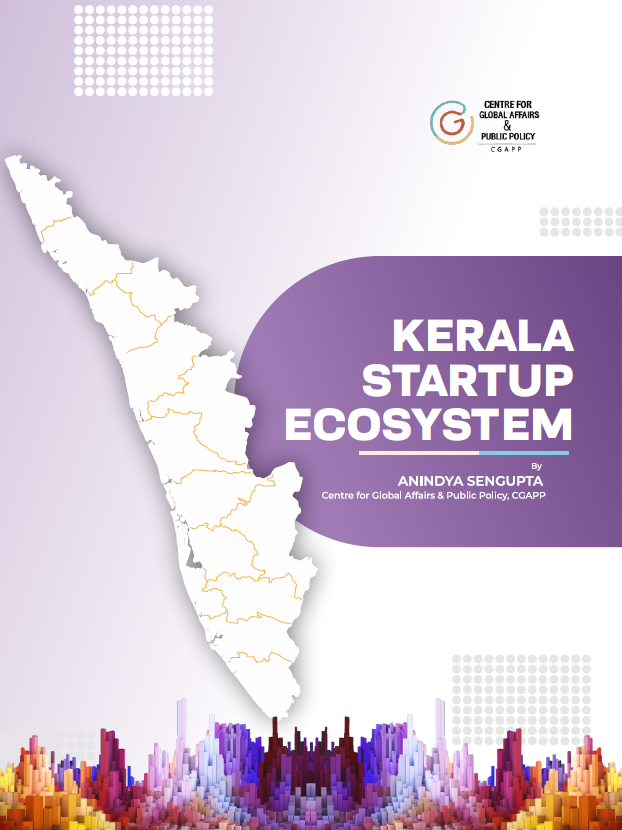
Kerala Startup Ecosystem
The report assesses Kerala’s startup ecosystem as promising but underperforming in scale and maturity and argues for a strategic shift to unlock its potential. While Kerala has over 5,000 startups and strong fundamentals—high literacy, talent availability, and quality of life—it suffers from weak funding depth, limited late-stage growth, and concentration in a few cities. Only a small fraction of startups receive funding, with negligible late-stage capital, indicating difficulty in scaling.
The core recommendation is a shift from a state-level to a city-level strategy. Investment decisions today are driven by city ecosystems rather than state policies, requiring Kerala to develop integrated, city-specific business plans.
The report maps out niche specialisations for three principal clusters in the state —Thiruvananthapuram-Kollam, Kochi-Thrissur, and Kozhikode-Kannur—based on existing strengths, rather than competing broadly with established hubs like Bengaluru.
A second key recommendation is sectoral focus and ecosystem building. Kerala should prioritise areas such as enterprise tech, cybersecurity, fintech (especially in Thrissur), data centres, and GCCs, leveraging existing institutional and industrial linkages. This must be supported by stronger industry-academia collaboration, incubators, and targeted talent development.
Third, the report stresses proactive policy and perception change. Kerala lags competitors in responsiveness to emerging sectors (e.g., data centres, GCCs) and must adopt mission-mode outreach, improve ease of doing business, and actively market its cities to investors and global firms.
Fourth highlights deepening funding and networks are critical—through stronger VC participation, diaspora engagement, regular investor interactions, and flagship events (e.g., fintech summits).
Finally, the report highlights leveraging anchor opportunities—such as the Vizhinjam port, data centres, and GCC expansion—to create spillovers in startups, logistics, and advanced manufacturing. Overall, Kerala’s path forward lies in focused specialisation, city-led planning, ecosystem depth, and stronger global integration
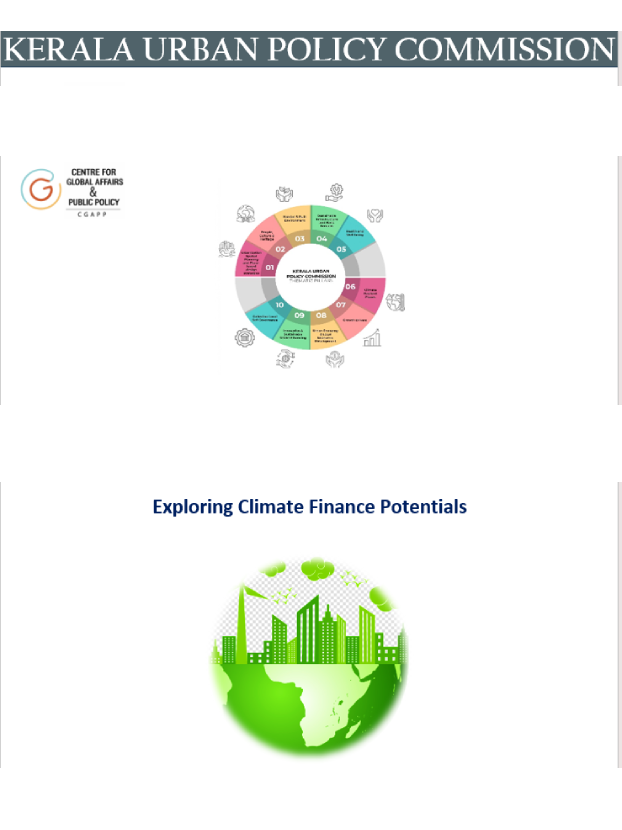
Exploring Climate Finance Potentials for Kerala Cities
The report highlights that Kerala’s rapidly urbanising cities face a significant financing gap in building climate-resilient infrastructure, despite strong policy intent. With increasing exposure to extreme weather events and rising infrastructure needs, urban local bodies (ULBs) require access to diverse and innovative sources of climate finance, especially given the fiscal stress in the state. However, globally and in India, only a small share of climate funds reaches the city level, making it essential for Kerala to proactively develop mechanisms to access and deploy such financing.
The recommendations focus on strengthening institutional capacity, improving financial readiness, and building partnerships. First, awareness and partnerships are critical—ULBs must actively engage with global climate networks and collaborate with state governments, think tanks, and international agencies to unlock funding opportunities.
Second, capacity building at the ULB level is essential. Cities should establish dedicated climate teams, prepare long-term climate resilience plans, and institutionalise climate budgeting. Improving accounting systems, data management, and internal revenue mobilisation will enhance credibility with investors and funding agencies. ULBs must also prioritise core urban services—water, waste, sanitation, and public health—as entry points for climate finance.
Third, the report emphasises leveraging existing schemes and innovative instruments. Cities should maximise use of central and state schemes, while exploring municipal and green bonds, carbon credit markets, and blended finance models. Strengthening creditworthiness and aligning projects with sustainability criteria will be key to accessing these instruments. Fourth, state-level institutional support is crucial. A dedicated agency should be empowered to support ULBs in project preparation, financial structuring, bond issuance, and accessing international funds. This “handholding” approach can address capacity gaps and improve project quality and bankability.
Overall, the report argues that Kerala must move from policy intent to execution by building city-level capacity, deepening partnerships, and adopting innovative financing strategies to scale climate action.

Business to Government Facilitation (B2G)
CGAPP supports municipalities through climate finance, fundraising capacity building, and technology-driven urban solutions. Our work focuses on enabling sustainable, resilient, and future-ready urban governance.

Kerala Urban Commission report
The Kerala Urban Commission reports focused on strengthening Kerala’s startup ecosystem and exploring climate finance pathways for sustainable urban development. The studies highlighted city-led growth strategies, ecosystem development, climate resilience, and financing mechanisms for future-ready urban governance.

Capacity Building of Local Government
CGAPP supports municipalities through climate finance, fundraising capacity building, and technology-driven urban solutions. Our work focuses on enabling sustainable, resilient, and future-ready urban governance.